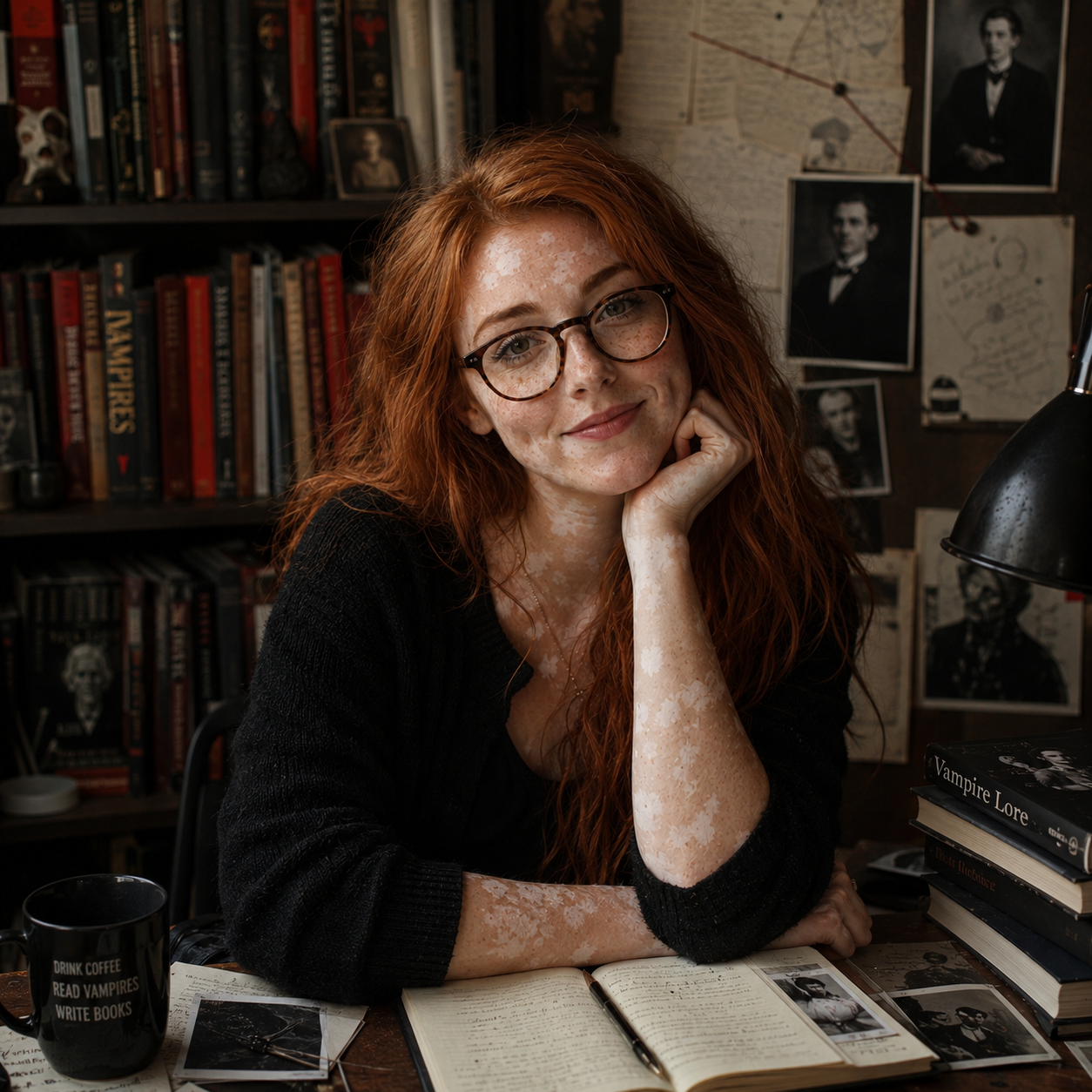
There is a very specific type of scene that shows up again and again in dark romance and vampire stories: the woman alone in a room, the night pressing against the glass, the beautiful danger somewhere outside, and a choice that will be framed as either romance or caution. The genre wants the audience to feel the pull of the door. That is part of the fun. But the smartest woman in the story is often the one who locks it anyway.
That does not make her boring. It makes her awake. The woman who locks the door understands something many romantic plots work very hard to blur: intensity is not proof of safety. A man can be magnetic and still be wrong for the room. A vampire can be lonely and still be dangerous. A beautiful stranger can look like escape and function like a trap. The lock is not a rejection of romance. It is a refusal to confuse romance with surrendering basic judgment.
Dark romance depends on tension between desire and danger. Remove the danger and the story loses its gothic charge. Remove the judgment and the story becomes foolish. The best heroines do not survive because they never feel temptation. They survive because they can feel temptation without treating it as a legal document. They understand attraction is information, not instruction.
The lock is a boundary, not a personality flaw
A surprising amount of romantic storytelling treats boundaries as obstacles to be overcome. The locked door, the guarded heart, the unanswered message, the refusal to go upstairs, the insistence on daylight, the demand for honesty — these are sometimes framed as defenses the romantic hero must break through. That can be thrilling in fiction, but only if the story knows what it is doing. In the wrong hands, it teaches the audience to cheer when wisdom gets worn down.
The gothic version of this is especially dangerous because gothic settings make caution look atmospheric instead of practical. The heroine is not just avoiding a bad date. She is standing in a house where the doors matter, the windows matter, the invitation matters, and the rules may be older than her understanding. The lock is not a symbol of emotional immaturity. It is the only thing between the warm room and the beautiful thing outside that has no business being trusted after midnight.
A vampire story that respects its heroine should let her boundaries be intelligent. She may be curious. She may be lonely. She may want the danger. She may even open the door later for reasons the story earns. But the first refusal should not be mocked. Refusal is one of the most important powers a human being has in a vampire story. The monster wants access. The heroine’s job is not to make access easy because the soundtrack swelled.
This is where female vampire fiction gets interesting. The woman who locks the door is not rejecting desire; she is demanding that desire answer questions. Who benefits if the door opens? What happens after the beautiful moment? Does the person outside respect the lock, or does he resent it? That last question may be the entire romance test. A dangerous man who respects a locked door is complicated. A dangerous man who resents it is not a dark hero. He is a problem with cheekbones.
Good romance survives wisdom
A love story worth keeping should survive boundaries. It should become clearer under pressure, not more manipulative. If the relationship only advances when the heroine ignores her instincts, isolates herself, excuses warning signs, and rebrands fear as chemistry, the story may be romantic in packaging but predatory in structure. The lock helps reveal that. It asks whether the person outside wants her or only wants access to her.
The vampire is useful because he literalizes that question. He cannot simply enter, depending on the rule set. He has to be invited. That makes the woman at the door powerful. The story may surround her with beauty, loneliness, old music, moonlight, and the ache of being seen, but the decision remains hers. The lock is a physical reminder that her consent matters.
This does not mean every heroine must behave like a security consultant. Fiction is allowed to be messy, passionate, reckless, and strange. But even reckless romance should know when it is being reckless. The strongest dark romance lets the audience feel the danger honestly. It does not insult the heroine by pretending the red flags are roses. It lets her choose with her eyes open, and it lets consequences have weight.
Addison Belle’s lane should keep returning to that standard. Desire is not the enemy. Naivete is. Beauty is not the enemy. Confusing beauty with goodness is. Mystery is not the enemy. Refusing to ask what the mystery costs is. The woman who locks the door may still fall in love later, but if she is written well, she will make the darkness prove it deserves even one inch of the threshold.
The smartest character is often the one who understands that a locked door can be romantic in the deepest sense because it protects the possibility of love from being mistaken for invasion. A lock says: I am not prey simply because I am curious. I am not available simply because you are fascinating. I am not obligated to open because the night has good lighting.
In a vampire story, that is not coldness. That is survival with standards.
The locked door also gives the romance room to become worthy. If the danger respects the lock, the story gets more interesting. If it does not, the heroine has learned something before the cost became higher.